

Blog
NDIS Transport Funding in Sydney: Levels, Rates & How to Claim (2026 Guide)

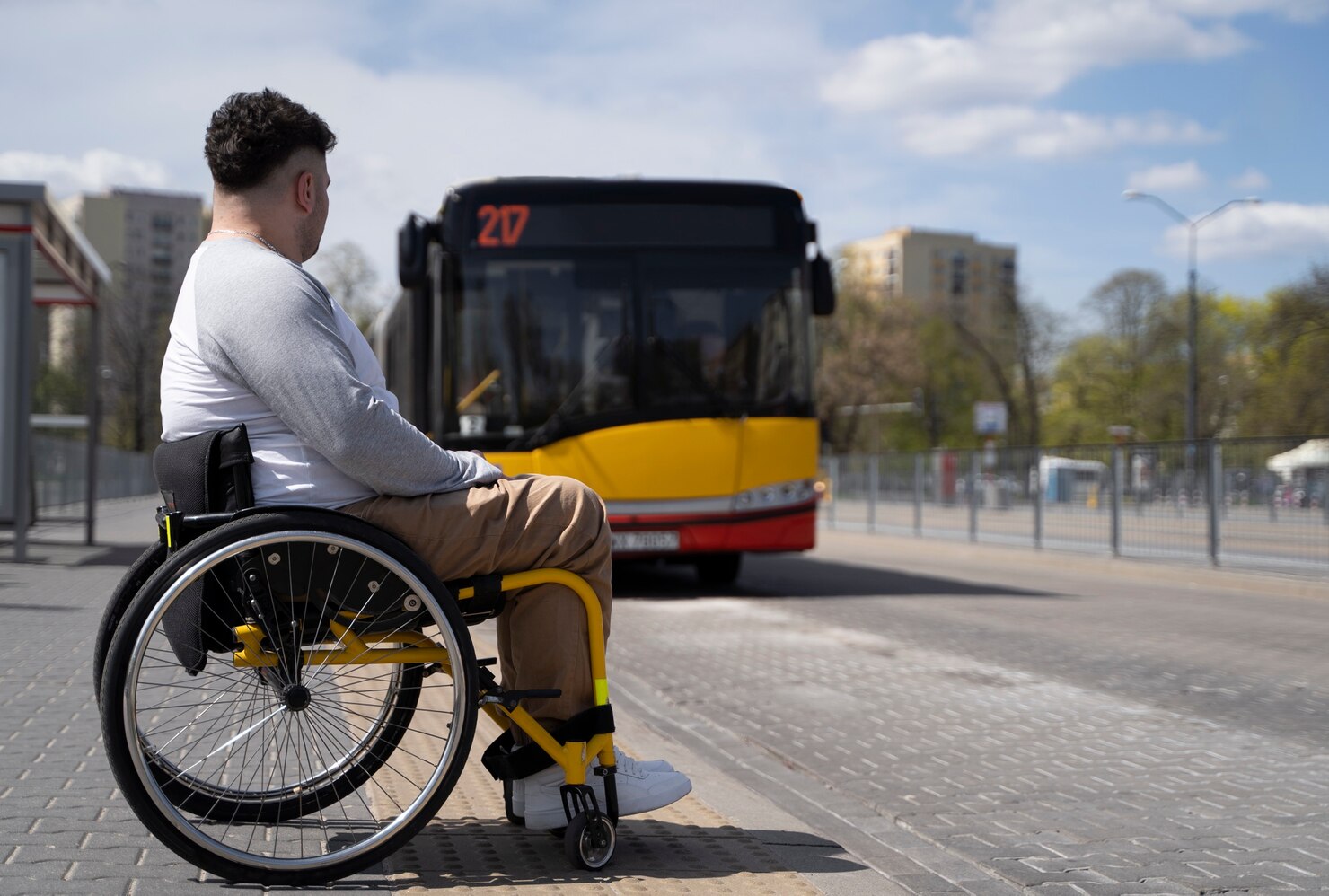
Getting from A to B shouldn’t be a barrier to living your best life. But for many NDIS participants in Sydney, NDIS transport funding is one of the most confusing — and underused — parts of their plan. People don’t know which level they’re on, what they can spend it on, or how to combine it with the NSW Taxi Transport Subsidy Scheme to stretch their budget further.
If you’re an NDIS participant in Sydney who can’t use public transport because of your disability, the NDIS can fund your transport needs. Whether it’s taxis to medical appointments, Uber rides to a day program, or a support worker driving you to community participation activities — there’s NDIS transport funding in Sydney available to help you get where you need to go.
In this guide, we explain everything about NDIS transport funding in Sydney: the three funding levels, 2025–26 rates, what’s covered, how provider travel works, the NSW Taxi Transport Subsidy Scheme, how to claim, and practical tips to maximise your transport budget.
How NDIS Transport Funding Works
NDIS transport funding is designed for participants who cannot use public transport without substantial difficulty due to their disability. It’s not for everyone — if you can take the bus or train independently, you won’t receive transport funding. But if your disability makes public transport unsafe, inaccessible, or impractical, the NDIS provides annual funding to help cover your transport costs.
According to the official NDIS transport funding page, this funding is paid as a regular fortnightly instalment — either into your NDIS-managed account or directly into your bank account if you self-manage.
There are two distinct types of NDIS transport support:
- Participant Transport Funding — A set annual amount (Levels 1–3) in your plan to cover your own travel costs (taxis, rideshare, private vehicle costs)
- Provider Travel & Activity-Based Transport — Costs claimed by your support worker or provider when they travel to you or transport you to activities
These are funded differently and have different rules. Let’s break each one down.
The 3 NDIS Transport Funding Levels (2025–26)
Your NDIS transport funding in Sydney falls into one of three levels, based on your current work, study, and activity situation. The NDIA determines your level during your plan meeting.
| Level | Annual Amount (2025–26) | Fortnightly Payment | Who Qualifies |
|---|---|---|---|
| Level 1 | $1,784/year | ~$68.62/fortnight | Not working, studying, or attending day programs — but seeking to enhance community access or do volunteer work |
| Level 2 | $2,676/year | ~$102.92/fortnight | Working or studying part-time (up to 15 hours/week), attending day programs, or participating in social, recreational, or leisure activities |
| Level 3 | $3,456/year | ~$132.92/fortnight | Working, looking for work, or studying at least 15 hours/week, and unable to use public transport due to disability |
These amounts are current as of 1 July 2025 and were updated to align with rising living costs and inflation. They are paid fortnightly. For the latest rates, see the NDIS Pricing Arrangements 2025–26.
How to Know Which Level You’re On
Your transport funding level is determined during your NDIS planning meeting based on your current circumstances. Ask yourself:
- Am I working, studying, or looking for work 15+ hours/week? → Level 3
- Am I working or studying part-time (under 15 hours), attending day programs, or doing regular social/recreational activities? → Level 2
- Am I not currently working or studying, but want to get out into the community? → Level 1
Can You Move Up a Level?
Yes. If your circumstances change — for example, you start working part-time or begin studying — you can request a plan review to move to a higher transport funding level. Provide evidence of your new work or study commitment (employment contract, enrolment letter, etc.).
Exceptional Circumstances
In some cases, the NDIA may provide transport funding above the standard levels — for example, if you have funded supports in your plan that specifically enable employment participation and the standard level doesn’t adequately cover your travel needs. Discuss this with your planner or support coordinator at your plan review.
What Can You Spend Your NDIS Transport Funding On?
Your transport funding is flexible. You can use it for any reasonable transport costs related to your disability and plan goals, including:
What’s Covered
- Taxis — standard taxis, wheelchair-accessible taxis (WATs), and maxi taxis
- Rideshare — Uber, Didi, Ola, and other rideshare services
- Private vehicle costs — fuel, tolls, and parking when someone drives you (or you drive yourself)
- Community transport — local council or community-run transport services
- Modified vehicle running costs — if you have a modified vehicle for accessibility
What’s NOT Covered
- Buying a vehicle — NDIS transport funding does not cover vehicle purchases
- Public transport fares — if you can use public transport, you’re expected to use it (and pay standard fares)
- Transport for carers — funding doesn’t cover carers transporting you for everyday commitments
- Ambulance services — emergency transport is covered by health systems, not the NDIS
- Interstate travel for holidays — your transport funding is for regular, disability-related transport needs
What About Trips in Sydney?
To put these funding levels in real-world Sydney terms:
| Common Sydney Trip | Estimated Taxi Cost | Trips Per Year (Level 1) | Trips Per Year (Level 3) |
|---|---|---|---|
| Green Valley to Liverpool (medical appointment) | ~$25–$35 | ~51–71 trips | ~99–138 trips |
| Fairfield to Parramatta (day program) | ~$30–$40 | ~45–59 trips | ~86–115 trips |
| Wakeley to Sydney CBD (work/study) | ~$50–$70 | ~25–36 trips | ~49–69 trips |
Estimates based on standard taxi fares. Actual costs vary by time of day, traffic, and provider. Using the NSW Taxi Transport Subsidy Scheme (covered below) can effectively double these numbers.
Provider Travel & Activity-Based Transport
Separate from your personal transport funding, NDIS also covers costs when your support worker travels to you or transports you to activities. This is claimed by the provider, not by you, and comes from different parts of your plan.
Provider Travel (Worker Travelling to You)
When a support worker travels to your home or another location to provide a service, the provider may claim:
| Cost Type | Rate (2025–26) | Details |
|---|---|---|
| Vehicle running costs (standard) | $0.99 per km | Standard, non-modified vehicle |
| Vehicle running costs (modified/accessible) | $2.76 per km | Wheelchair-accessible or modified vehicle |
| Travel time (metro Sydney) | Up to 30 minutes | Capped at the hourly rate of the support being delivered |
| Travel time (regional) | Up to 60 minutes | Higher cap for regional areas |
| Public transport fares | Actual cost | If the worker uses public transport to reach you |
| Tolls and parking | Actual cost | Must be incurred during service delivery |
Important: Provider travel costs must be reasonable, necessary, pre-approved by you, and clearly documented on invoices. Your service agreement should outline agreed travel charges upfront.
Activity-Based Transport (Worker Transporting You)
When a support worker drives you to a community participation activity or other funded support — with you in the vehicle — this is called activity-based transport. The provider can claim:
- The worker’s time at the agreed hourly rate for the relevant support (e.g., community participation rate). If transporting multiple participants, the time is shared across participants.
- Vehicle running costs at $0.99/km (standard) or $2.76/km (modified vehicle)
Activity-based transport is claimed from your Core Supports budget under the applicable community participation or daily living line item. It should be agreed in advance in your service agreement.
Key Difference: Provider Travel vs Activity-Based Transport
| Scenario | Type | What’s Claimed |
|---|---|---|
| Worker drives to your house to provide support | Provider Travel | Worker’s km + capped travel time (you are NOT in the vehicle) |
| Worker drives you to the shops as part of community participation | Activity-Based Transport | Worker’s time + km (you ARE in the vehicle) |
The NSW Taxi Transport Subsidy Scheme (TTSS)
If you live in Sydney and have a severe, permanent disability that prevents you from using public transport, you may also be eligible for the NSW Taxi Transport Subsidy Scheme (TTSS) — a state government scheme that works alongside your NDIS transport funding.
How the TTSS Works
- The TTSS covers half of your taxi fare, up to $60 per trip
- You receive a TTSS Smartcard (or docket book) to use with participating taxi companies
- Available for standard taxis and wheelchair-accessible taxis (WATs) across NSW
- There is no annual cap on the number of trips — you can use it as often as you need
How to Apply
You can apply through Service NSW or at a Service NSW centre. You’ll need:
- Proof of identity
- Evidence of your disability (medical certificate or NDIS plan)
- Proof of NSW residency
For full details, visit the Transport NSW TTSS page.
Combining TTSS with NDIS Transport Funding
This is one of the best-kept secrets in NDIS transport. You can use both your NDIS transport funding AND the TTSS together to effectively double your transport capacity.
Here’s how it works in practice:
| Example | Without TTSS | With TTSS |
|---|---|---|
| Taxi fare: $40 | You pay $40 from NDIS funds | TTSS pays $20 + you pay $20 from NDIS funds |
| Level 1 trips/year ($1,784) | ~45 trips at $40 each | ~89 trips at $20 each (after TTSS subsidy) |
Important: When you join the NDIS, mention that you’re a member of the TTSS. The NDIA takes other transport supports into account when setting your funding level — so being upfront helps ensure your level is set accurately.
Who Is Eligible for NDIS Transport Funding in Sydney?
To receive NDIS transport funding in Sydney, you must:
- Be an NDIS participant with a current plan
- Be unable to use public transport without substantial difficulty due to your disability
“Substantial difficulty” means your disability makes it unsafe, impractical, or impossible to use buses, trains, ferries, or light rail. Examples include:
- You use a wheelchair and most stations or bus stops are not accessible
- You have a cognitive or intellectual disability that makes navigating public transport unsafe
- You have severe anxiety, agoraphobia, or psychosocial disability that prevents you from being in crowded public spaces
- You have a vision impairment that makes independent public transport navigation dangerous
- You have a physical disability that prevents you from walking to/from stops or standing during travel
- You have epilepsy or another condition where unsupervised travel is medically unsafe
Who Does NOT Qualify?
- Participants who can use public transport independently — even if it’s inconvenient
- Participants whose transport needs are not related to their disability
- People who are not NDIS participants (the TTSS may still be available separately)
If you’re unsure whether you qualify, discuss it with your planner at your next plan meeting. An OT assessment can provide evidence of why public transport is unsafe or impractical for you.
How to Claim Your NDIS Transport Funding in Sydney
How you claim depends on how your plan is managed:
NDIA-Managed Plans
Your transport funding is paid as fortnightly instalments directly into your nominated bank account. You spend it on transport costs as needed — taxis, rideshare, fuel, tolls, parking — without needing to submit receipts. The NDIA manages the payment automatically.
Plan-Managed Plans
Your plan manager receives your transport funding. You may need to submit receipts or invoices to your plan manager to access the funds, depending on their processes. Check with your plan manager for their specific requirements.
Self-Managed Plans
You receive your transport funding directly and manage it yourself. You’re responsible for keeping records of how you spend it. Keep receipts for all transport expenses in case of an audit.
Claiming Provider Travel Costs
Provider travel and activity-based transport are claimed by your provider, not by you. These costs come from different parts of your plan (typically Core Supports). Ensure your provider:
- Includes travel costs in your service agreement upfront
- Separates labour (travel time) and non-labour (km, tolls, parking) costs on invoices
- Uses the correct NDIS line item codes
- Does not exceed the NDIS price caps (30-minute travel time cap in metro Sydney)
NDIS Transport Line Items and Codes
For participants, support coordinators, and plan managers, here are the key NDIS line items for transport in 2025–26:
| Line Item Code | Description | Budget Category |
|---|---|---|
| 02_051_0108_1_1 | Transport (participant transport funding — Levels 1–3) | Core Supports |
| 04_590_0125_6_1 | Activity-Based Transport (provider transporting you to activities) | Core Supports — Social & Community Participation |
Provider travel (km and time) is claimed under the relevant support line item for the service being delivered — not under a separate transport code.
Tips to Maximise Your NDIS Transport Funding in Sydney
1. Apply for the NSW TTSS
If you haven’t already, apply for the NSW Taxi Transport Subsidy Scheme. It effectively halves your taxi costs (up to $60 per trip), which can nearly double the number of trips your NDIS transport funding covers.
2. Compare Taxi vs Rideshare Prices
In Sydney, rideshare (Uber, Didi) is often cheaper than taxis for shorter trips, especially during off-peak times. Check both options before booking. Note: you can use the TTSS with taxis only, not rideshare — so weigh the subsidy vs the lower base fare.
3. Combine Transport with Community Participation
If your support worker drives you to community participation activities, the transport cost (activity-based transport) comes from your community participation budget, not your transport funding. This means you can use both budgets strategically — save your personal transport funding for independent trips and use activity-based transport for supported outings.
4. Request Level 3 If You’re Working or Studying
Level 3 ($3,456/year) is almost double Level 1 ($1,784/year). If you’re working or studying at least 15 hours per week, make sure your plan reflects Level 3. Bring evidence (employment contract, study enrolment) to your plan meeting.
5. Check Your Service Agreement for Travel Charges
Some providers charge travel costs that eat into your Core Supports budget. Review your service agreement to understand: how much your provider charges per km, whether they charge travel time, and whether tolls/parking are included. Negotiate if the charges seem excessive.
6. Use Community Transport Options
Sydney has several community transport services run by local councils and not-for-profit organisations. These are often cheaper than taxis and can be paid from your transport funding. Check what’s available in your local area — Western Sydney, South-Western Sydney, and Greater Sydney all have community transport providers.
7. Keep Records
Even if your plan is NDIA-managed and you don’t need to submit receipts, keep a record of your transport spending. This helps at plan review to demonstrate that your current funding level is adequate (or request an increase) and protects you in case of an audit.
8. Plan Your Travel Week
Batch appointments and activities on the same days where possible. A single trip to Liverpool for a medical appointment followed by grocery shopping is cheaper than two separate round trips. Planning ahead saves significant transport funding over the year.
NDIS Transport Funding for Specific Situations
Transport to Work
If you’re working or looking for work, Level 3 transport funding ($3,456/year) is designed to help you get there. This can cover taxis, rideshare, or private vehicle costs for your commute. If $3,456 isn’t enough to cover your work transport needs, discuss exceptional circumstances funding with your planner.
Transport to Medical Appointments
Regular medical appointments (GP, specialists, therapy) are a common transport need. Your NDIS transport funding can cover these trips. For participants in SIL or SDA, your support worker may transport you (activity-based transport) instead, which comes from your Core Supports rather than your personal transport funding.
Transport for Children
Children under 18 with NDIS plans may also receive transport funding if they cannot use public transport due to their disability. Parents/carers typically manage this funding on the child’s behalf. Note: transport to and from school is generally the responsibility of the education system, not the NDIS.
Transport in Western Sydney
Participants in Western Sydney suburbs (Green Valley, Wakeley, Fairfield, Blacktown, Penrith, Liverpool, Campbelltown) often face longer distances to services and supports. If standard funding levels don’t cover your needs due to geographical spread, raise this at your plan review with evidence of your regular travel patterns and costs.
How OneJesus Care Supports Your Transport Needs in Sydney
At OneJesus Care, we know that transport is the link between your home and your life. Without reliable transport, you can’t get to work, attend appointments, join social activities, or participate in your community.
As a 100% non-profit NDIS provider in Sydney, we offer:
- Assist with Travel and Transport — planning and arranging transport to appointments, social events, community programs, and recreational activities
- Community participation with built-in activity-based transport to and from activities
- Support workers who can drive you to appointments and activities across Sydney and Western Sydney
- Transparent pricing — clear travel costs agreed in your service agreement upfront, no hidden charges
Whether you need help getting to a medical appointment in Liverpool, a day program in Parramatta, or a social outing in the city — we’re here to help.
For a full overview of all our NDIS supports, visit our NDIS services explained page.
Frequently Asked Questions About NDIS Transport Funding in Sydney
Can I use NDIS transport funding for Uber?
Yes. You can use your NDIS transport funding for Uber, Didi, Ola, and other rideshare services. However, the NSW Taxi Transport Subsidy Scheme (TTSS) only works with taxis — not rideshare. So compare the total cost: a taxi with TTSS subsidy vs a potentially cheaper Uber fare without the subsidy.
Do I need to keep receipts?
If your plan is NDIA-managed, transport funding is paid as fortnightly instalments and you generally don’t need to submit receipts. If you’re plan-managed or self-managed, you should keep receipts. Regardless of your plan type, keeping records is recommended for plan reviews and audits.
Can my carer or family member be paid to drive me?
No. NDIS transport funding does not cover carers or family members driving you as part of everyday support. However, you can use your transport funding to reimburse reasonable vehicle running costs (fuel, tolls) if a family member drives you to disability-related activities. Check with your planner for specific rules.
What if my transport funding runs out before the end of my plan?
If your transport funding is exhausted early, you cannot get more until your next plan review. This is why budgeting and using the TTSS are so important. At your next plan review, provide evidence of your transport spending to justify a higher level or exceptional circumstances funding.
Can I use transport funding for respite or STA trips?
Generally no. When you access Short Term Respite (STR), your transport to and from the respite property is typically arranged separately. However, you may be able to use your transport funding for travel to the STR location if it’s not otherwise covered. Check with your support coordinator.
Is transport funding flexible with other Core Supports?
Transport funding (line item 02_051_0108_1_1) is a stated support in your plan — it is specifically allocated for transport and cannot be moved to other Core Supports. However, activity-based transport claimed by your provider comes from your broader Core budget, which does have some flexibility.
How do I get my transport funding level increased?
Request a plan review and provide evidence of changed circumstances — for example, starting a new job, enrolling in study, or increased medical appointments. Show your current transport spending and explain why the higher level is needed to meet your disability-related transport goals.
Can I use NDIS transport funding AND the TTSS at the same time?
Yes. You can use the TTSS to cover half your taxi fare (up to $60 per trip) and then use your NDIS transport funding to cover the remaining balance. This effectively doubles the number of taxi trips your NDIS funding can cover.
Disclaimer
The information in this article is intended as a general guide only and should not be taken as legal, financial, or medical advice. NDIS eligibility, funding levels, and transport rules are assessed individually by the NDIA and may change. The transport funding levels quoted ($1,784, $2,676, $3,456 per year) and provider travel rates ($0.99/km, $2.76/km) are based on the NDIS Pricing Arrangements and Price Limits 2025–26. Taxi fare estimates for Sydney trips are approximations and will vary by time, traffic, and provider. The NSW TTSS is administered by Transport for NSW and has its own eligibility criteria separate from the NDIS. We recommend speaking with your NDIS planner, Local Area Coordinator (LAC), or support coordinator for advice tailored to your situation. For the most current NDIS transport information, visit the official NDIS transport funding page.
Next Steps
Transport might not be the most glamorous part of your NDIS plan, but it’s the foundation that connects you to everything else — your job, your medical team, your community, and your independence. Understanding your NDIS transport funding in Sydney, maximising it with the TTSS, and knowing how provider travel works can make a real difference to your daily life.
At OneJesus Care, we help NDIS participants across Sydney get where they need to go — whether that’s a support worker driving you to a community activity, arranging transport to medical appointments, or helping you navigate your transport funding at plan review.
Call us on 1800 04 CARE (1800 04 2273) or contact us online for a free consultation.